


AI Users vs the Unemployed: Why Upskilling Matters More Than Ever in 2026
Updated on November 30, 2025 12 minutes read

Across industries, a quiet divide is emerging between professionals. On one side are individuals who confidently utilise advanced tools to enhance their work. The other people are doing the same tasks in the same way they did years ago.
By 2026, that gap is no longer theoretical. In many workplaces, it already looks like the difference between being the person who gets promoted into new roles and the person whose tasks are slowly automated away.
The new divide: AI users vs the unemployed
For a long time, the big question was tech jobs vs non-tech jobs. Today, the more useful question is, ”Who knows how to use modern, intelligent tools well, and who doesn’t?”
You can see this divide inside a single team. Two people may share the same job title, but one uses assistants, automation, and digital workflows, while the other relies entirely on manual effort and old habits.
The first becomes faster, more precise, and more creative in their work. They handle complex tasks and help their team adopt new tools. The second gets left with the routine, repetitive tasks that are easiest to automate.
Everyday examples of the skills gap
Imagine two content marketers with the same years of experience. One plans campaigns, analyses performance data, and uses tools to draft and refine content. The other spends hours writing everything manually and rarely looks at analytics.
Or think of two customer support agents. One uses smart helpdesk tools, templates, and suggestions so they can focus on tricky cases. The other copies and pastes answers from old emails and spends every day fighting the queue.
Over time, the user in each pair becomes more valuable to the organisation. They’re not competing with technology; they are collaborating with it. That’s exactly where you want to be in 2026.
Why 2026 is a turning point for your career
For years, we heard that automation and smart tools were coming soon. Now they’re baked into the software people use every day, from office suites to project boards and design tools.
Companies have also matured in how they use these systems. They’re not just experimenting anymore. They’re restructuring workflows, redesigning roles, and rethinking what they expect from each employee.
In this environment, standing still is a risky strategy. Even if your job title doesn’t change, the skill mix behind that job is shifting. The safest place to be is in motion, upgrading your abilities piece by piece.
What employers are really looking for now
Hiring managers still care about qualifications and experience, but they’re paying closer attention to practical skills. They want to know what you can do today, not just what you studied years ago.
They look for people who can learn new systems quickly, improve processes on their own, and collaborate across disciplines. Curiosity and adaptability have become just as important as technical knowledge.
Upskilling is simply the process of becoming that kind of professional. It lets you move from feeling replaceable to being someone employers actively seek out.
What upskilling really means in 2026
Upskilling doesn’t have to mean going back to university or taking a multi-year degree. In 2026, it’s mostly about targeted, practical learning that fits around your life.
You can think of it as building three layers. First, you choose and develop concrete technical skills. Then you become a power user of modern tools. Finally, you strengthen the human skills that make you adaptable and effective in any environment.
When these three layers work together, you become the kind of AI user who can ride the wave of change instead of being knocked over by it.
1. Technical skills: visible, measurable abilities
Technical skills are the ones that appear in job ads and on your CV. They’re the easiest for recruiters to filter for, and the easiest for you to demonstrate through projects.
Examples include web development, Python programming, data analysis, cybersecurity fundamentals, and UX/UI design. You don’t need all of them. Picking one path and learning it deeply is far more powerful than skimming five.
These skills show that you can build, fix, analyse, or design real things. In a world where more work depends on software and data, that’s a major advantage.
2. Tool skills: becoming the power user on your team
Tool skills are about how you use the platforms and software around you. They often make the difference between someone who struggles with change and someone who drives it.
This includes using project boards properly, organising shared documents, and understanding how different systems connect. It also means knowing how to use intelligent features to draft, summarise, translate, and automate routine tasks.
People with strong tool skills often become the go-to person when a team adopts something new. That visibility helps you build influence and opens doors to more interesting projects.
3. Power skills: human strengths that don’t expire
Power skills, sometimes called soft skills, are the ones machines struggle to replace. They’re also the skills that matter more when everything else is shifting.
They include clear communication, structured thinking, and the ability to collaborate across disciplines. They also include resilience, curiosity, and the willingness to keep learning even when things feel uncomfortable.
When you combine these with technical and tool skills, you become far more than someone who learned to code. You become a professional who can solve problems, work with others, and adapt as technology evolves.
Five signs your job is at risk of automation
Not every job is equally exposed, but many roles contain parts that are easy to automate. Recognising this early gives you time to act on your terms.
First, if most of your day is spent repeating the same steps, that’s a warning sign. Work that feels like following a script is exactly the kind that software is designed to handle.
Second, if your tasks could be done by following a strict checklist, they’re easier to turn into rules and code. The less human judgment needed, the higher the automation risk.
Third, if you have limited contact with real people (customers, clients, patients, or students), your role is more likely to be restructured or combined with others.
Fourth, if success is measured mainly in quantity and speed, you may end up competing directly with automated systems. Metrics like tickets processed or forms approved are easy to optimise with technology.
Finally, if new tools are appearing in your workplace and you feel resistant, that’s a sign to pay attention. You don’t have to master everything at once, but you can’t afford to opt out entirely.
These signs don’t mean you’re doomed. They simply mean now is a smart time to invest in new skills before the decision is made for you.
Future-proof skills you can start learning now
The good news is that future-proof skills are more accessible than ever. You don’t need permission from your employer to begin learning them, and you don’t have to quit your job to make progress.
A useful strategy is to start with broad digital essentials. Then, if you want a bigger shift, you can move into a focused tech path such as Web development, Data Science, Cybersecurity, and UX/UI design.
Either way, the goal is the same: to become the kind of professional who can work comfortably with modern tools and handle the parts of the job that truly require a human.

Digital essentials for every professional
Digital basics are no longer optional. Almost any role benefits from better spreadsheet skills, clearer writing, and basic data literacy.
Being able to organise information, spot trends, and turn raw numbers into simple charts makes you far easier to work with. So does writing emails and reports that busy people can skim and understand.
These skills are also a gentle stepping stone into more technical areas. Once you’re comfortable here, learning a scripting language or a data tool feels far less intimidating.
Tech career paths aligned with the future of work
If you want to move directly into tech, certain paths are closely tied to how modern organisations operate. These roles help build, secure, or interpret the systems driving change.
Web development focuses on building the websites and apps people use every day. Data roles revolve around turning information into insights and decisions. Cybersecurity protects systems and users from growing threats.
UX/UI design makes products usable and enjoyable, bridging the gap between complex technology and real people. As tools become more powerful, good design becomes even more important.
These areas are exactly where many online bootcamps, including Code Labs Academy, place their focus. Their programmes cover Web development, Data Science, Cybersecurity, and UX/UI design to help beginners and career-changers step into in-demand roles.
How bootcamps help you cross the gap
Once you decide to take upskilling seriously, you’ll see a long list of options. You might try self-study, short online courses, university degrees, or immersive bootcamps.
Bootcamps sit in the middle. They’re structured, practical programs designed to take you from beginner or career-changer to junior professional in a focused period of time.
Instead of trying to learn everything, a good bootcamp concentrates on in-demand tools, workflows, and skills. The aim is not to make you an academic expert, but someone who can contribute to real projects.
Why bootcamps work for busy adults
Many bootcamps are specifically built around adult learners. They offer part-time or flexible schedules, remote access, and clear weekly expectations so you can learn alongside work and family commitments.
They’re also project-based. You don’t just absorb theory; you build applications, dashboards, prototypes, or security labs. By the end, you have concrete evidence of your skills, not just a course completion badge.
Bootcamps are challenging and require discipline, but they compress the trial-and-error of self-study into a guided path. For many, that support is the difference between giving up and actually changing careers.
How Code Labs Academy supports your upskilling journey
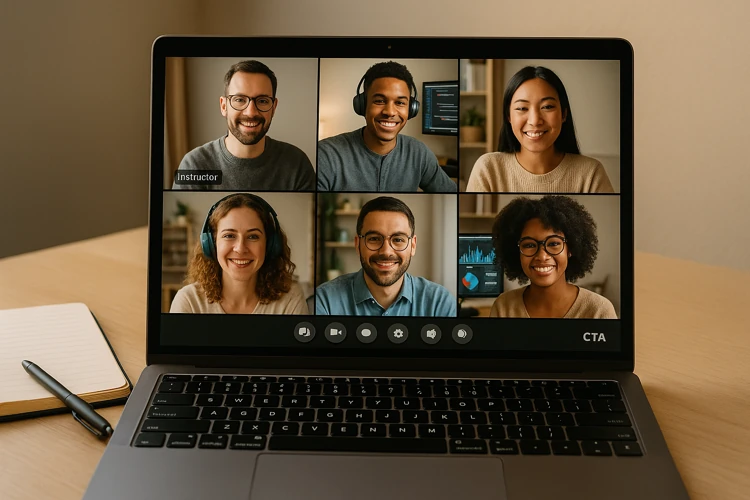
Code Labs Academy is an international coding school offering live online bootcamps in Web development, Data Science, Cybersecurity, and UX/UI design. Its programmes are designed with career-changers and upskillers in mind, so you can learn from anywhere without putting your life on pause.
Gaining job-ready skills in high-demand fields
Each Code Labs Academy bootcamp follows an industry-driven curriculum that is regularly updated to match current tools and practices. In practical terms, that means working with modern stacks, libraries, and platforms used in real companies.
You learn through live sessions, exercises, and labs rather than passively watching pre-recorded videos. This approach helps you build confidence not only in the concepts, but in the day-to-day workflows you’ll use in a real job.
Building a portfolio that speaks louder than a CV
Throughout the programmes, learners complete real projects that form a professional portfolio. If you study web development, that might include full-stack apps or responsive sites.
In data, you’ll likely produce analyses, visualisations, and models. Cybersecurity learners work through practical labs and reports, while UX/UI students build research-driven design case studies.
When you start applying for jobs, that portfolio shows employers how you think and what you can do. It’s particularly powerful when you’re switching from a different industry.
One-to-one career support and mentoring
Changing careers is about more than skills; it’s also about storytelling and strategy. Code Labs Academy offers one-to-one career support, including CV and LinkedIn reviews, interview practice, and guidance on job search tactics.
You’ll get help translating your previous experience into an asset rather than a barrier. That includes framing your background in ways that make sense for hiring managers in tech.
If you’re seriously considering a structured route into tech, it’s worth exploring their bootcamp pages, downloading a syllabus, or booking a chat with an advisor to see how everything fits your goals.
A 90-day upskilling roadmap you can start today
You don’t have to wait for the perfect moment to begin. A simple 90-day plan can create more momentum than years of vague intention.
Think of the roadmap in three phases. First, you build awareness and foundations. Second, you pick a direction and create your first project. Third, you deepen your skills and begin sharing your work.
By the end of 90 days, you won’t be finished, but you’ll have moved firmly into the AI user camp with visible progress to show.
Days 1-30: Audit, explore, and build foundations
Start by listing your main tasks at work and marking which ones are repetitive, rules-based, or could be summarised in a checklist. This shows you where you may be most exposed to automation.
Next, spend short daily sessions exploring paths like Web development, Data Science, Cybersecurity, and UX/UI design. Watch taster sessions, attend free events, or read beginner-friendly guides to see what genuinely interests you.
Finally, pick one digital essential to improve, such as spreadsheets, basic coding, or design tools. Aim for short, focused practice sessions several times a week, treating them like appointments you keep with yourself.
Days 31-60: Choose a path and complete your first project
After a month of exploration, choose one main direction based on interest and market demand. This might feel scary, but committing actually reduces stress and indecision.
Create a realistic weekly learning schedule around your existing responsibilities. Even a few consistent hours can move you forward faster than occasional bursts of effort.
During this period, build a small project related to your chosen path. It could be a simple website, a basic analysis, a security lab, or a prototype. The key is to finish something, however small, so you experience the full cycle.
Days 61-90: Deepen your skills, share your work, and connect
In the final month, take on a slightly more complex project that stretches you. Combine multiple skills, such as front-end and back-end code, or research and interface design.
Begin sharing your work on platforms like GitHub, Behance, or a simple portfolio site. Post occasional updates about what you’re learning on LinkedIn to build visibility and confidence.
Finally, talk to people. Connect with alumni, attend online meetups, or speak with advisors from schools like Code Labs Academy. Ask what they wish they had known earlier and how they’d approach the journey if they were starting today.
By the end of 90 days, you’ll have more clarity, a growing skill set, and evidence that you can learn and deliver, all powerful signals in the job market.
Choose to be an AI user, not a bystander
The phrase AI users vs the unemployed may sound harsh, but it captures a real trend. The people who thrive in 2026 will be those who embrace new tools and combine them with strong human skills.
You don’t need to transform your life overnight. You do need to take consistent, deliberate steps to build skills that matter, especially in digital and tech-adjacent areas.
If you’re ready to move from worry to action, explore structured paths like the online bootcamps at Code Labs Academy
Download a syllabus or talk to an advisor about your goals. The sooner you start, the more control you’ll have over how the future of work looks for you.