


Coding Bootcamps in 2026: Market Trends, AI Tools, and Hiring Signals
Updated on November 20, 2025 6 minutes read

If you are planning a career move in 2026, the signal is clear: employers want skills you can prove, AI you can control, and portfolio projects they can review fast. Degrees help, but the strongest outcomes come from work samples and clear communication. This guide outlines what has changed, what to learn, and how to select a coding bootcamp that translates focused effort into interviews.
To make your research easier, we have gathered key trends and signals in one place. You will also see how Code Labs Academy (CLA) turns those expectations into projects, support, and outcomes across four tracks. To compare start dates now, visit Explore Programs and keep this page open while browsing.
2026 snapshot: demand, skills-first hiring, and AI adoption
The job market is rewarding people who reskill with purpose. Across industries, a large share of core skills is shifting, so short, applied learning paths matter more each year. Learners who adapt quickly and show evidence tend to reach interviews faster.
Companies are moving to skills-first hiring. Many teams now screen for practical capability rather than filtering only by degrees or past titles. That change opens doors for career changers when portfolios and assessments are easy to review.
Adoption of AI has moved from novelty to normal workflow. Most developers use AI tools, yet hiring managers still expect human review and judgment. Strong portfolios explain how you validated AI-assisted work and where you chose a different path.
Security needs remain steady as organizations digitize more operations. Whether you build products, dashboards, or interfaces, basic cybersecurity practices are part of the role. If you enjoy structured problem solving, security offers a clear route with hands-on skills you can demonstrate.
What this means for you: choose training that helps you show real work, use AI with guardrails, and speak in outcomes. Those elements carry weight in resume screens, technical checks, and take-home tasks.
AI tools you will use - and the tasks they accelerate
The goal is not to use AI. The goal is to ship better work faster without losing quality or ownership. Here is how that looks in each CLA track, with tasks that convert well into portfolio proof and interview stories.
Web Development
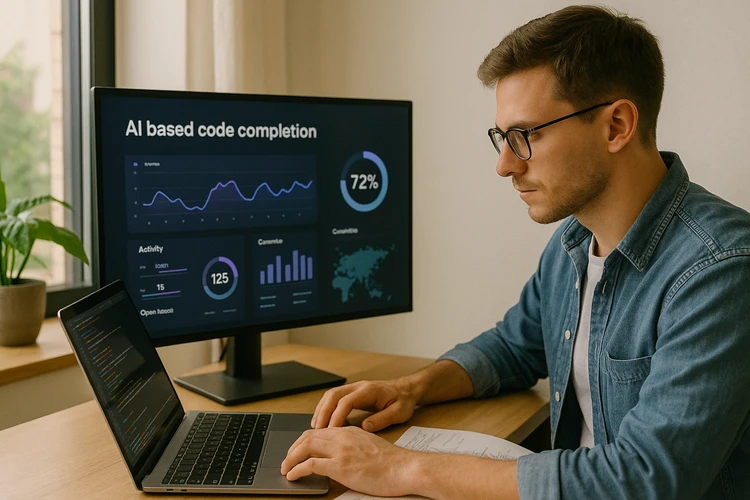
You will pair with an assistant to draft functions, tests, and documentation. Your advantage is human judgment: naming, structure, and access control. Add CI to catch regressions, and include performance and accessibility checks so your app feels production-minded.
A strong demo is a small full-stack app with auth, a dashboard, and a short video that shows the result. Keep your README skimmable with setup steps, screenshots, and a “what I would do next” section. Explore the stack and schedule on Web Development Bootcamp.
Data Science & AI
AI speeds EDA, feature ideas, and basic code scaffolding. You still own data cleaning, evaluation strategy, metric selection, and reproducibility. Track experiments, include a simple model card, and explain trade-offs in plain language.
For your demo, show a notebook-to-repo flow with clear metrics and a short case study. Focus on what improved, what risks you managed, and how you validate results. See the full plan on Data Science & AI Bootcamp.

Cybersecurity
Use AI to summarize logs, support triage, and draft playbooks, but verify every step with captured evidence. Practice detection and concise reporting that a hiring manager can read quickly. Your value is turning noise into action, then documenting the fix.
A strong artifact is a case-style report that walks through recon, detection, and response with screenshots and mitigations. See how CLA structures those labs on Cybersecurity Bootcamp.
UX/UI Design
AI can help with copy variants, quick ideation, and test scripts. You lead on accessibility, developer handoff, and design systems, using a structure that teams can ship. Usability notes and before/after screens make your impact easy to see.
Build case studies that show the problem, the process, and the impact. Include a Figma prototype link and a summary at the top for speed reading. Explore the track on UX/UI Design Bootcamp.
Hiring signals that matter in 2026
Portfolio over pedigree. Lead with two or three projects that match local job ads. Clean repos, basic tests, and a short demo show maturity faster than a long resume.
AI with guardrails. Many developers use AI, but teams still prize verification. Put a line in each project explaining how you checked outputs, such as tests, benchmarks, or feedback.
Security awareness everywhere. Even non-security roles expect safe defaults. Note how you handled secrets, authorization, and input validation to earn reviewer trust.
Clear communication. Strong commit messages and concise pull requests keep work moving. A tidy README and short demo give reviewers a fast path to yes.
How to choose a bootcamp in 2026
Look for live formats with feedback, not just on-demand videos. You grow by shipping, getting reviews, and iterating. Ask how often you will present work and how instructors deliver feedback.
Review project depth over module count. You want artifacts that include tests, docs, and a brief demo. Ask to see sample repos so you know what “done” looks like in that program.
Confirm career support that goes beyond templates. You want 1-to-1 coaching, mock interviews, and weekly accountability. Then select a schedule that fits your life: 12-week full-time for speed, or 24-week part-time for sustainability.
Finally, make bootcamp financing predictable. Compare a monthly plan, scholarships, and public numbers where available, and ask for a written outline before you enroll. Start here: Financing Options.
Mid-article CTA: Ready to compare formats and dates? Open Explore Programs, shortlist two tracks, and book a quick call to map your timeline.
Why Code Labs Academy fits 2026 hiring
Live, mentor-led cohorts keep you accountable and close to real workflows. You present work, get feedback, and improve decisions, which is exactly what hiring teams test for in interviews.
CLA offers four focused tracks, including Web Development, Data Science & AI, Cybersecurity, and UX/UI Design. Choose full-time (12 weeks) or part-time (24 weeks); programs target ~500 hours and end in portfolio-ready projects delivered live online.
You are not alone after graduation. Career Services includes 1-to-1 coaching, mock interview practice, and curated job roundups so you keep momentum during the search.
A practical 30-60-90 day plan to get hire-ready
Days 1-30: Choose a track, set your schedule, and protect a daily practice block. Ship a small feature each week with a quick demo. Start a decision log so your case studies write themselves.
Days 31-60: Build a flagship project tied to a role you want. Add tests and a basic CI pipeline, and run two interviews per week to practice stories and timing with peers or mentors.
Days 61-90: Polish READMEs, apply daily, and pair each application with one outreach. Track replies and schedule reviews so you keep momentum even when responses are slow.

Financing your pivot without the stress
Good financing is transparent and simple. You should see installments, scholarships, and funding options in one place, with a plan you can stick to. A clear path keeps you steady through busy weeks.
CLA helps you map scenarios before you enroll, so timing and budget align. Warm up with a free mini course, then step into a cohort when it fits. Begin here: Financing Options and Free Tech Courses.
Final Steps
If you are serious about a move this year, act while motivation is high. Pick a track, lock your schedule, and commit to shipping one small feature this week. Momentum not perfection, gets interviews.