


DevOps Skills for 2026: From CI/CD to Platform Engineering
Updated on December 11, 2025 11 minutes read

The way we build and ship software is changing fast. Release cycles are shorter, systems are more complex, and users expect smooth, reliable digital experiences around the clock.
If you’re considering a tech career change or upskilling in your current role, DevOps is one of the most future-proof paths you can take. But the DevOps skills you’ll need in 2026 are more advanced and more platform-focused than the checklists from a few years ago.
In this guide, we’ll explore the essential DevOps skills for 2026, from solid CI/CD foundations to the rise of platform engineering. You’ll see what to learn, how roles are evolving, and how to prepare even if you’re learning alongside a full-time job or other commitments.
Why DevOps Skills Matter So Much in 2026
Companies across every industry now rely on software to deliver value, not just tech giants. That means they need to release features faster, keep systems stable, and respond quickly when something breaks.
DevOps sits at the centre of all of this, connecting development, operations and security. It turns siloed teams into a shared, continuous delivery pipeline instead of a hand-off at the end of a project.
For you, this translates into strong demand, remote-friendly opportunities and clear progression paths. Whether you start as a junior DevOps engineer, SRE or cloud engineer, these skills travel well between companies, products and countries.
Core DevOps Skills You’ll Still Need in 2026
The principles of DevOps stay the same: collaboration, automation and continuous improvement. What changes over time is the baseline of what employers expect, even from junior candidates.
Version Control and Collaborative Workflows
Git is the language of collaboration in modern teams. By 2026, basic Git knowledge is assumed, not considered a bonus, so it’s crucial to get comfortable with it early.
You should know how to create branches, commit changes and merge them back safely without losing work. Hosted platforms such as GitHub, GitLab and Bitbucket will feel like familiar tools rather than intimidating interfaces.
If you’re coming from a non-technical background, treat Git as your first DevOps habit. Every time you learn something or build a small script, put it in a repository so your progress is visible.
CI/CD Pipelines: The Non-Negotiable Skill
Continuous Integration and Continuous Deployment turn software delivery into a repeatable process instead of a stressful release night. By 2026, the ability to design and maintain CI/CD pipelines will be a key hiring filter.
You’ll want to run tests automatically on every push, build artefacts such as container images and deploy them with minimal manual steps. Concepts like rolling deployments, blue-green releases and automated rollbacks will become part of your everyday vocabulary.
The exact CI tool matters less than understanding the pattern: trigger pipelines from events, run checks, promote builds through stages and keep everything transparent for the team. Once you’ve built one good pipeline, you can adapt the pattern to new projects very quickly.
Cloud Fundamentals and at Least One Provider
DevOps and the cloud are tightly connected. By 2026, very few companies will run everything on-premises, so being cloud-literate is part of the job, not a specialist extra.
You don’t need to master every AWS, Azure or Google Cloud service, but you should understand the basics. That includes virtual machines, storage, networks and identity, so you can reason about where your applications actually run.
As your confidence grows, you’ll move into managed services and serverless options. Depth in one provides, plus familiarity with others, makes you more flexible in the job market.
Containers and Kubernetes
Containers are now a standard way to package and run applications. They make environments more consistent, easier to move and simpler to scale up or down as needed.
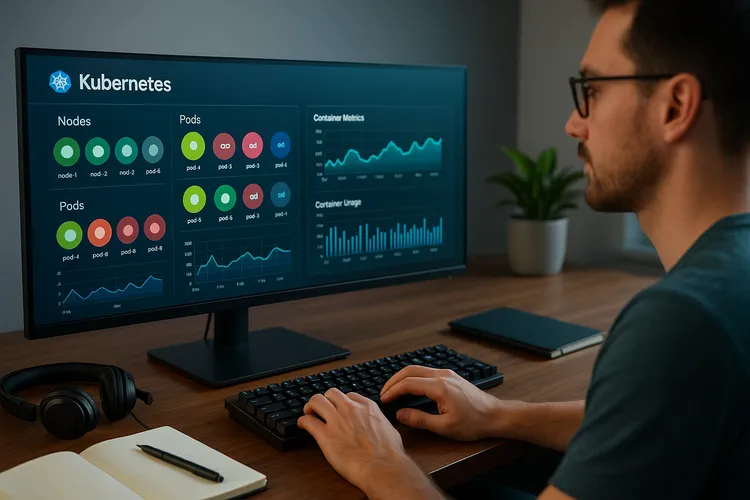
Kubernetes has become the dominant orchestration platform for running containers at scale. You don’t need to be a tuning expert, but you should understand pods, deployments and services well enough to debug basic issues.
When you combine containers, Kubernetes and CI/CD, you get a powerful workflow for building, shipping and operating services. That combination will remain a core feature of many DevOps and platform engineering roles.
Infrastructure as Code (IaC)
Infrastructure as Code turns servers, networks and databases into versioned, testable definitions. Instead of clicking around dashboards and hoping nothing breaks, you describe your infrastructure in files and apply it in a controlled way.
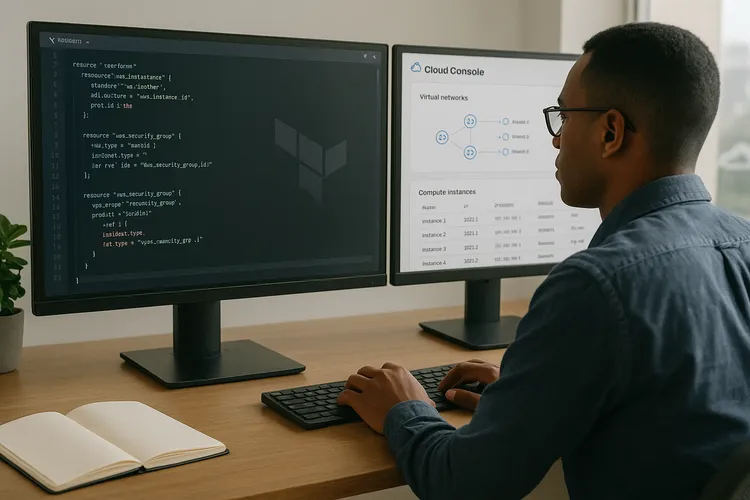
Tools like Terraform and OpenTofu let you define virtual networks, compute instances, managed databases and permissions. Because everything lives in version control, changes can be reviewed, tested and rolled back like code.
By 2026, IaC will be considered a core DevOps skill rather than a bonus. Employers will look for people who can integrate environment changes into CI/CD pipelines and keep environments reproducible over time.
Observability and Monitoring
Monitoring tells you when something is wrong; observability helps you understand why. As systems become more distributed, relying on guesswork or a single dashboard isn’t enough to keep services healthy.
You’ll work with metrics, logs and traces, learning what each reveals about system behaviour. Tools such as Prometheus, Grafana, Elastic Stack or cloud-native services make it easier to spot patterns and investigate incidents.
Good observability lets you respond quickly when things go wrong and gradually improve reliability over time. By 2026, being able to read dashboards, interpret data and suggest improvements will be a valued part of your DevOps toolkit.
From DevOps to Platform Engineering: What’s Changing
As organisations grow, letting every team build its own pipelines and tooling leads to chaos. It creates duplication, inconsistent practices and a maintenance burden that slows everyone down.
Platform engineering has emerged as a way to handle this complexity. Instead of each team reinventing the wheel, a dedicated platform team builds reliable, shared building blocks that other teams can use safely.
For you, this shift means DevOps is no longer just about automating a few scripts. It’s about designing and operating platforms that dozens of developers depend on every day to build, deploy and observe their services.
What Is Platform Engineering in Practice?
In practice, platform engineering teams build and run an Internal Developer Platform. This brings together infrastructure, deployment, observability and security into opinionated, well-supported workflows.
Developers interact with the platform through simple interfaces such as portals or command-line tools. They can create environments, deploy services and roll back changes without understanding every underlying system.
Behind the scenes, the platform usually relies on Kubernetes, Infrastructure as Code and automated policies. Platform engineers are responsible for reliability, developer experience and continuous improvement of the platform as a product.
Platform Skills to Watch for 2026
If you want to stay ahead, start thinking like a future platform engineer even as you learn DevOps basics. Many internal platforms already use Kubernetes plus IaC as their default technology stack.
Developer experience, often shortened to DevEx, is a critical theme. It’s about making tools intuitive, fast well-documented so developers feel supported rather than blocked by the platform.
Platform engineering also encourages a product mindset. You’ll gather feedback, prioritise improvements and measure success based on how much value the platform delivers to its users.
Beyond Tools: The DevOps Mindset and Soft Skills
Tools will keep changing, but the way you think and work with others is what keeps your career moving. The most effective DevOps professionals combine strong technical abilities with equally strong people skills.
In 2026, teams will look for engineers who can ask good questions, explain trade-offs and facilitate collaboration. These qualities help you build trust and lead improvements across the whole system.
Systems Thinking
Systems thinking means looking beyond individual bugs and seeing how all parts of a system interact. Instead of asking only what broke, you also ask which assumptions or processes allowed the problem to happen.
This perspective helps you design more resilient architectures and workflows. It also makes your incident reports and improvement proposals more valuable because they focus on fixing underlying causes.
Communication and Collaboration
DevOps roles sit at the intersection of development, operations and security. You’ll spend a lot of time clarifying problems, sharing context and negotiating trade-offs between different teams.
Clear communication turns incidents into learning opportunities instead of blame sessions. It also makes interviews easier, because you can walk through your projects and decisions in a structured way.
Security by Default
Security can’t be bolted on at the end of a release cycle. A DevSecOps mindset weaves security into design, development, testing and deployment from the very start.
Practically, this means using tools that scan dependencies and container images, managing secrets safely and enforcing least-privilege access. Many of these checks can run automatically inside your CI/CD pipelines.
You don’t need to be a specialist security engineer to get started. What matters is treating security as part of your job and staying curious about common threats, patterns and defences.
How to Start Building DevOps Skills for 2026
If you’re starting from another field, DevOps can look overwhelming. The key is to build a learning path that starts small, focuses on real projects and grows steadily over time.
Begin by learning a language widely used in DevOps, such as Python, Go or JavaScript. Aim to write small scripts that automate simple tasks, so you get used to reading documentation and solving problems.
At the same time, practice Git by committing changes and pushing them to a hosted platform. Treat your learning notes and experiments as real projects so version control becomes a natural daily habit.
How a Structured Bootcamp Can Help Without Taking Over
Self-study gives you flexibility, but it can also be confusing and lonely. Many people who want to move into DevOps struggle to decide what to learn next, how deep to go and how to build a portfolio that employers trust.
A structured online bootcamp, like those offered by Code Labs Academy, can help you move faster without starting from scratch alone. You get a clear path, regular feedback and a community of people working toward similar goals.
Their programs in areas like Web Development, Cybersecurity, UX/UI Design and Data Science & AI teach fundamentals that employers actually use. Even if the program isn’t branded as DevOps, it still builds skills in version control, cloud deployment and secure thinking.
If you like structure and accountability, exploring online bootcamps and talking to an advisor can help you decide whether this route fits your life. It’s perfectly valid to mix bootcamp learning with self-study, as long as you keep moving toward a realistic timeline.
A Realistic 6–12 Month Learning Roadmap
If you’re learning while working or managing other responsibilities, you don’t need to rush. A realistic 6–12 month roadmap helps you stay consistent and see steady progress.
In the first two months, focus on basic coding, Git and understanding what DevOps is and why it matters. Build tiny scripts, commit them regularly and read introductory resources on CI/CD, cloud and agile methods.
During months three and four, set up your first CI/CD pipeline and deploy a simple application to the cloud. Concentrate on automating tests, learning how configuration is managed and getting comfortable with logs and basic monitoring.
Months five and six are a good time to introduce containers and Infrastructure as Code. Containerise your existing app, deploy it to a small Kubernetes cluster and describe your infrastructure with IaC so the setup is fully reproducible.
Beyond six months, start thinking more like a platform engineer. Improve your observability, experiment with self-service ideas and explore security scanning tools while contributing to open-source or writing about your projects.
If you decide to join a bootcamp during this period, align that schedule with your own plan. Use the course structure to guide your weekly focus while still keeping your long-term DevOps ambitions in view.
Building a DevOps Portfolio That Stands Out
Certificates are helpful, but in DevOps and platform engineering, practical evidence often matters more. A strong portfolio shows you can design, build and support real systems even if they are small.
One effective project is a complete CI/CD pipeline for a simple app, documented from commit to deployment. Another is an Infrastructure as Code repository that can recreate a realistic environment, including network, compute and storage.
You might also create an observability setup with dashboards, alerts and a short incident report. For an extra edge, build a small internal tool that makes deployment or environment creation easier, showing that you think like a platform engineer.
For each project, add a clear README explaining the problem you solved, the technologies you used and the trade-offs you made. This gives interviewers strong material to discuss and lets you tell your story with confidence and clarity.
Preparing for DevOps and Platform Engineering Interviews
When your skills and portfolio are at a comfortable level, you’ll naturally start thinking about interviews. Preparing in a structured way can make this stage less stressful and more predictable.
Practise explaining your projects in everyday language, focusing on the end-to-end lifecycle. Describe how you planned the work, built the pipeline, deployed the system and monitored it in production-like conditions.
Expect scenario questions about incidents, trade-offs and teamwork. Career support, such as mock interviews and feedback from services like career services can help you refine your answers and build confidence.
Get Ready for DevOps and Platform Engineering Careers in 2026
DevOps is evolving, but it isn’t going away. The fundamentals of CI/CD, cloud, containers, Infrastructure as Code and observability will remain essential in 2026 and beyond.
Platform engineering builds on those foundations, asking you to design internal platforms and care deeply about developer experience. That combination of technical depth and empathy for users is increasingly in demand.
If you’re serious about moving into this field, start by mastering the basics and building small, realistic projects. When you’re ready, explore Code Labs Academy’s online bootcamps, download a syllabus or talk to an advisor so you can map your learning to real roles.