


How Long Does It Take to Learn to Code? Real Timelines by Goal (2026)
Updated on November 20, 2025 6 minutes read

Learning to code doesn’t take forever—but it does take structure. Your timeline depends on your goal, weekly hours, and whether you actually ship small projects. With the right plan, most beginners move from “hello world” to job-ready in months, not years.
Coding timelines vary because people learn for different reasons. Some want to automate work. Others want a junior developer job, a data analyst role, or a start in cybersecurity or UX. This guide gives realistic timeframes and a simple way to reach them without burnout.
What really decides your timeline
Consistency beats intensity. Two or three short sessions each week compound faster than a single weekend binge. When you return regularly, your brain keeps context warm and you avoid re-learning.
Scope control matters. Small, shippable projects force decisions and build momentum. Giant “perfect apps” create endless to-do lists and stall progress. Finish something small, then improve it.
Feedback shortens the path. A mentor, a study group, or code reviews catch bad habits early. Fast feedback turns weeks of guessing into minutes of clarity—the best accelerator for beginners.
A plain-English timeline for 2025
Most people reach a job-ready level in 6–10 months by studying 10–15 hrs/week and shipping regularly. Hobby goals take less time. Advanced or research-heavy roles take longer.
If you only need enough coding to automate spreadsheets or build tiny tools, expect 4–8 weeks. If your goal is a junior role in web, data, security operations, or UX with front-end basics, assume ~6–10 months. The exact number matters less than steady progress and a clear end state.
Web development: from front-end to full-stack
A modern stack uses HTML, CSS, JavaScript/TypeScript, often React + Next.js on the front end, a small Node API, and SQL. Git and basic deployment tie everything together.
Plan 3–4 months for fundamentals and 2–5 months to turn skills into polished projects. You’re ready when you can build a clean UI, connect to a real API, handle auth, and explain trade-offs. A live demo and a short walkthrough video beat a long skills list.
Data analytics & data science: from notebooks to insight
Data roles reward clear thinking. Python and SQL do most of the heavy lifting. Pandas/Polars help transform data; a notebook keeps work reproducible. A small dashboard turns numbers into decisions.
Expect 3–4 months to master tools and 3–6 months to build two strong projects. The first should answer a business question. The second should use a new domain or dataset. Each needs a short narrative: question → method → result → recommendation.
Cybersecurity: blue-team beginnings
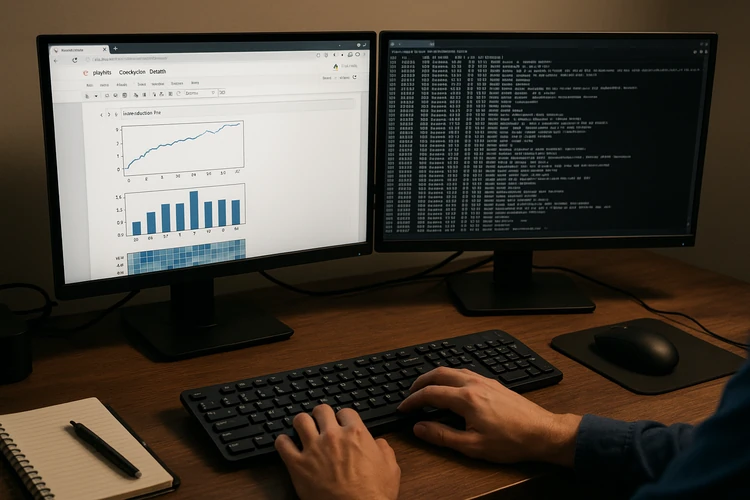
Security is hands-on. Learn networking basics, Linux, logs, detections, and a SIEM. A home lab lets you practice safely. Generate an event, capture, triage, and document what happened.
Most beginners reach entry level in 7–10 months at a steady pace. Two clear detection write-ups with steps will do more for your applications than a pile of theory notes. Employers want to see signal detection, plain-language reports, and mitigation.
UX/UI: case studies that tell a story
UX needs research, user flows, wireframes, Figma, and systems thinking. Many designers add basic HTML/CSS for dev handoff. The heart of your portfolio is a case study showing how you move from problem to prototype.
Plan 5–8 months for two strong case studies. Include a concise problem statement, a few research insights, and a clickable prototype. A clean narrative beats a folder of pretty screens.
A 30/60/90 plan that works for any track
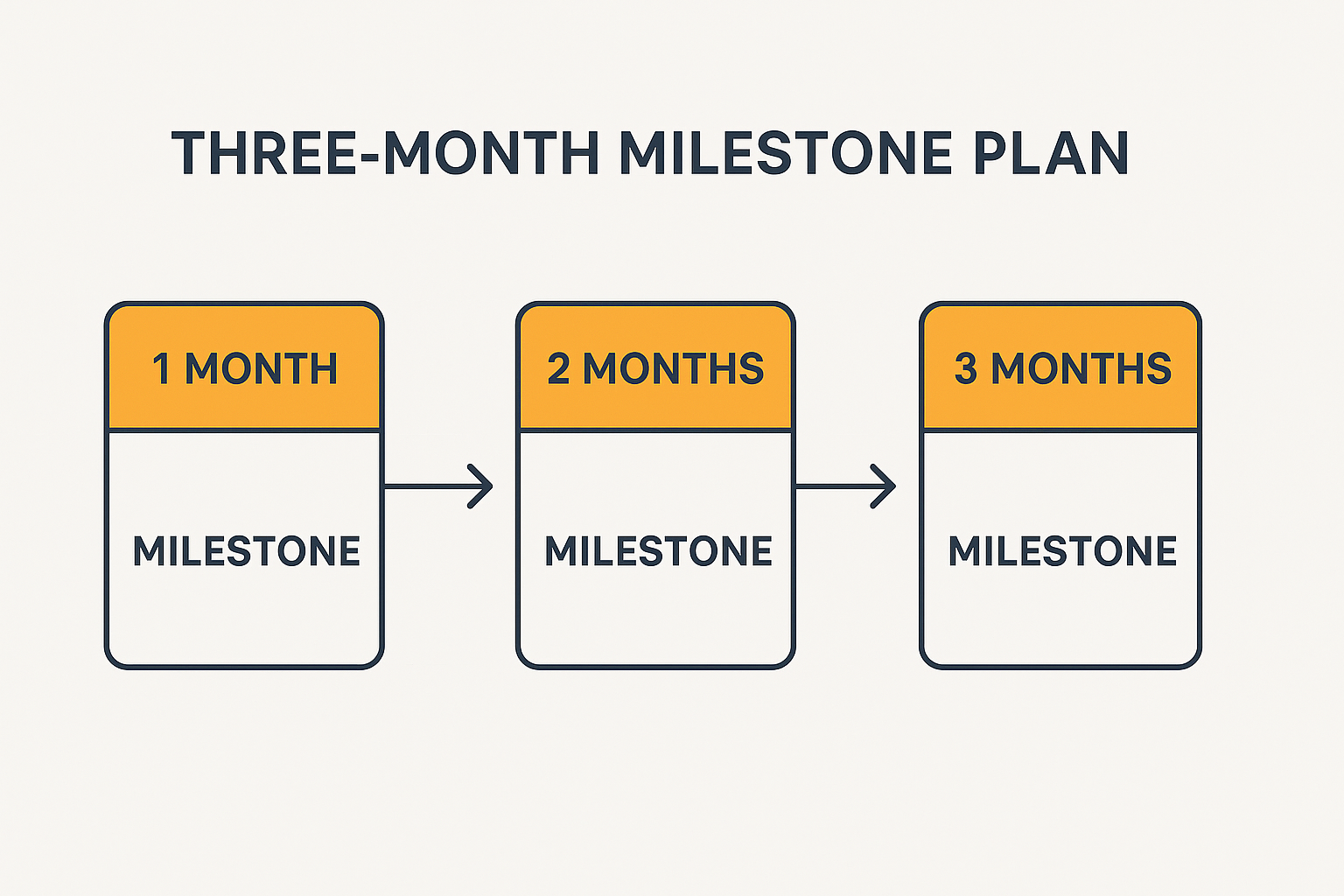
Days 1–30: Foundations and one tiny project. Keep it boring on purpose. Clarity over cleverness.
Days 31–60: Add complexity—API/auth/data. Keep scope small. Write down 2–3 trade-offs and why you chose them.
Days 61–90: Polish and communication. Improve accessibility/performance/tests. Record a 2-minute demo. Practice explaining one bug and the fix.
Weekly schedules you can keep
Tight schedule (6–8 hrs/week): two 90-min lessons, one 90-min project block, and a 60-min review to clean code and plan next steps.
Faster track (12–15 hrs/week): three 2-hr lessons, two 2-hr project blocks, plus a 90-min interview practice slot. Five minutes of speaking out loud each session builds confidence fast.
Using AI without losing the plot
AI can draft boilerplate, suggest tests, and offer patterns. It can’t replace judgment. Use it to move fast through the boring parts, then slow down where reasoning matters. Ask: why it works, where it breaks, and how to explain it.
Interviewers value honesty. If you used AI, say so, then show where you decided. That blend—speed + understanding—is what teams want in juniors.
Portfolios that earn replies
For web, a deployed full-stack app with a simple workflow and login.
For data, a tidy notebook and a dashboard answering one question.
For security, a clear detection report with screenshots and steps.
For UX, a concise case study that ends in a prototype.
Two polished pieces beat five half-finished experiments. Recruiters skim. Put your best work first, link a live demo, and keep explanations short.
Common roadblocks and simple fixes
Scope creep sinks beginners. Keep a one-page plan—goal, features, “not now” items. When it grows, cut something before adding more.
The tutorial loop feels productive but stalls growth. After each tutorial, build a tiny variant from scratch. You’ll retain more when you write the code yourself.
Inconsistent study causes re-learning. Treat sessions like calendar commitments. Small streaks build confidence, and confidence builds momentum.
No feedback is a silent blocker. Join a community, ask one specific question weekly, and act on it. You don’t need a committee—just a steady critique loop.
Bootcamp, self-study, or degree?
Bootcamps compress time with structure, mentorship, and accountability—great if you want a guided timeline and a clear finish line. Self-study works if you copy the same ingredients: a schedule, a project plan, and regular reviews. Degrees deliver deep theory and shine for research/systems roles, but aren’t required for most junior positions in 2025.
Choose the path you will finish. The best plan on paper loses to the simple plan you’ll follow. If unsure, run a 30-day sprint and measure how it felt. Your own data beats a hundred opinions.
How to tell you’re ready
You’ll never feel “done,” and that’s normal. You’re ready when you can build a small feature, describe trade-offs, and fix a modest bug on your own. If you can demo in two minutes and answer basic questions, start applying. The job search is part of the learning loop, not the reward at the end.
Your next steps
Pick your track and set a weekly schedule you can protect. Outline a tiny project and a two-minute demo. When it’s live, show it to someone and ask for one suggestion. Ship a second piece in a new domain or with one new tech. Keep your notes and demos short. Repeat until your portfolio shows two solid wins.
Careers are built from small pieces stacked patiently. A login that works. A chart that tells a story. A detection that catches something real. A prototype that clarifies a flow. Frame those pieces, explain them clearly, and you’ll look like someone teams can trust—because you are.
Where Code Labs Academy Fits In
If you want structure, feedback, and career support, our Web, Data, Cybersecurity,
and UX/UI bootcamps help you learn efficiently and prove competence.