


Why Choosing the Right Coding Bootcamp Is So Hard
Updated on December 08, 2025 12 minutes read

You open your laptop “just to research coding bootcamps”, and suddenly you’ve got 18 tabs open, each promising dream salaries, job guarantees, and life-changing outcomes.
The more you scroll, the harder it feels to tell what’s real and what’s just really good marketing.
If you’re an adult thinking about a tech career change or serious upskilling around a full-time job, the stakes feel high.
You’re about to invest serious time, money, and energy, and you absolutely don’t want to choose the wrong program.
1. Why Choosing a Bootcamp Feels So Overwhelming
On the surface, most coding and tech bootcamps look similar: a few months of intense learning, lots of projects, and a pathway into roles like web developer, data analyst, cybersecurity analyst, or UX/UI designer.
But under the hood, the differences can be huge.
You’re also dealing with information overload.
One website shows a shiny landing page, another shares a 30-page syllabus, a third leans heavily on reviews, and you’re left trying to compare apples to oranges.
To make it harder, many sites talk more about outcomes than the learning experience.
You might see salary charts and job titles, but not how much support you’ll get, or what your day-to-day as a student will actually feel like.
2. How to Choose the Right Coding Bootcamp (Without Getting Lost in Tabs)
Before you fall in love with any particular school, it helps to define your own criteria.
Think of this as your personal “choose the right coding bootcamp” checklist, something you can apply to every provider you’re considering.
That way, instead of asking “Which website looks the nicest?”, you’re asking “Which bootcamp actually fits my life, goals, and learning style?”.
This shift alone can make the whole decision feel calmer and more in your control.
2.1 Curriculum depth and specialisation
Start by looking beyond buzzwords like Python, React, or Figma.
Ask how far the curriculum takes you from basics to job-ready skills and whether it focuses on a clear area like web development, data science, cybersecurity, or UX/UI design.
A good school will usually share a detailed syllabus or at least a week-by-week breakdown.
When you explore structured programs like the Online coding bootcamps at Code Labs Academy, look for modules that build on each other and end in substantial portfolio projects, not just mini-tutorials.
2.2 Learning format and flexibility
Your schedule is just as important as the content.
If you’re working or have a family, a full-time, 9–5 bootcamp might simply not be realistic.
Look closely at whether the bootcamp is live, self-paced, or a blend of both.
Flexible formats, like the full-time and part-time options in Code Labs Academy’s online bootcamps, allow you to pick a pace that matches your energy and responsibilities.
2.3 Instructors, mentoring, and support
The difference between feeling stuck and making progress often comes down to how quickly you can get help.
Pre-recorded videos are fine for reference, but you’ll learn faster if you have access to real instructors and mentors.
When you compare schools, ask how much live interaction you’ll get: office hours, 1:1 calls, feedback on code or design work, and how questions are handled day to day.
Many learners specifically look for mentoring-led programs like those at Code Labs Academy, where small cohorts and live sessions are core to the experience.
2.4 Career support and real outcomes
If your goal is a career change, career services matter as much as the tech content.
You’re not just learning to code, you’re learning to present yourself as a credible junior professional.
Check what kind of support is included: CV and LinkedIn help, portfolio or GitHub reviews, mock interviews, and job search guidance.
Comprehensive services like those at the Career Services Centre can make a real difference when you’re applying for your first tech roles.
2.5 Price, payment options, and value
Bootcamps can look expensive at first glance, especially compared to cheap online tutorials.
But a strong boot camp is closer to an intensive vocational program than a casual course.
Instead of only comparing price tags, look at the value you’re getting: hours of instruction, mentoring, projects, and career support.
Also check whether there are payment plans or funding routes, such as the flexible options outlined on Code Labs Academy’s financing options page.
2.6 Community, peers, and alumni network
Finally, don’t underestimate the power of community.
Learning alongside other motivated people keeps you accountable and makes the hard weeks feel less lonely.
Look for active cohort channels, group projects, alumni communities, and events.
Strong networks, like the global community around Code Labs Academy bootcamps, can also lead to referrals, collaborations, and long-term friendships.
3. Code Labs Academy at a Glance
Now that you have a comparison framework, it can be helpful to see how a specific provider fits into it.
Code Labs Academy (CLA) is a global, online-first tech bootcamp focused on helping adults start or switch into tech careers.
CLA offers four main tracks, each designed as a beginner-friendly, job-focused bootcamp:
All programs are delivered online with live, instructor-led classes, structured self-study, and project-based learning.
Full-time and part-time options make it possible to study around a job, family, or other commitments.
4. Code Labs Academy vs a “Typical” Online Bootcamp
Every provider is different, but it’s useful to see how a structured, mentor-led bootcamp compares to a more generic online offering.
Here’s a high-level, simplified comparison.
| Criteria | Code Labs Academy | Typical online bootcamp / course |
|---|---|---|
| Learning model | Live online classes + guided self‑study + real projects | Often mostly video‑based, self‑paced |
| Class size & support | Smaller groups, direct access to instructors and mentors | Larger cohorts, limited or forum-only support |
| Specialised tracks | Focused tracks in Web Dev, Data Science & AI, Cybersecurity, UX/UI | Sometimes broad “full stack everything” programs |
| Schedule & flexibility | Full-time or part-time, designed for working adults | Frequently rigid schedules or “watch whenever” with no accountability |
| Career support | Dedicated career services including CV, LinkedIn, portfolio, and interviews | Varies widely; sometimes just generic tips or a resource list |
| Project & portfolio focus | Emphasis on portfolio-ready projects you can show employers | May include fewer, smaller, or purely theoretical assignments |
| Global reach | Remote-first with international cohorts and online delivery | Sometimes local or limited to one region |
| Transparency & access | Syllabi, blog resources, and book-a-call options before enrolment | Often limited direct contact or detail before payment |
This doesn’t mean “typical” bootcamps are bad.
It simply shows the areas worth investigating so that you can choose the right coding bootcamp for your goals.
5. What Really Sets Code Labs Academy Apart
Let’s look more closely at the core differentiators you’ll notice if you join one of the Code Labs Academy bootcamps.
These are especially important if your main aims are job‑ready skills, a solid portfolio, and clear career support.
5.1 Job-ready, project-based curriculum
Each track is built around projects that look and feel like real work, not just toy exercises.
By the end of a Web Development bootcamp, for example, you’ll have full‑stack apps that show you can build something from scratch.
In the Data Science & AI bootcamp, you’ll practice cleaning data, building models, and presenting insights in notebooks or dashboards.
Cybersecurity learners work on hands-on labs and simulations, while UX/UI learners create proper case studies and prototypes for their design portfolios.
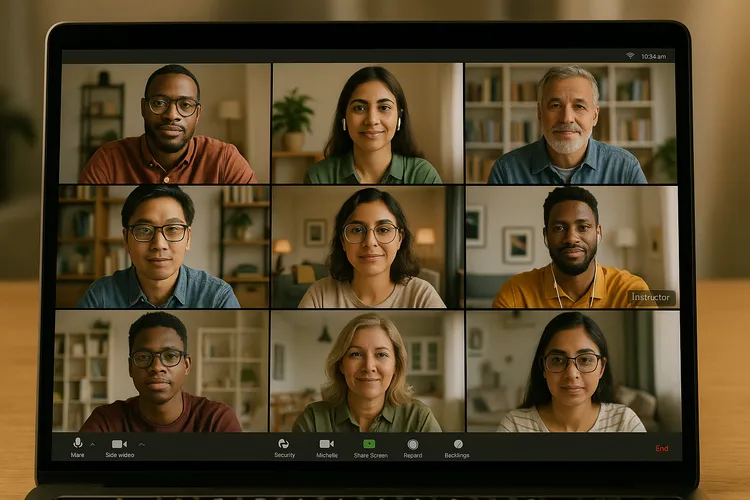
5.2 Personal mentoring and feedback
Instead of leaving you on your own with videos, CLA leans heavily on live teaching and mentoring.
You can ask questions in class, join office hours, and get targeted help when you’re stuck on a bug, design, or concept.
This kind of personal feedback speeds up your learning curve.
You move from “I hope this is right” to “I’ve had this reviewed by an experienced practitioner,” which is exactly what employers look for when they scan your GitHub or portfolio.
5.3 Career support that goes beyond graduation
Career support at CLA is built into the experience, not bolted on as an afterthought.
From early on, you start thinking about how your projects, story, and strengths will translate into job applications.
You’ll get guidance from the Career Services Centre on everything from CV and LinkedIn optimisation to mock interviews and job search strategy.
This helps you navigate the “second half” of the journey, moving from student to junior professional.
5.4 Flexible, global, online-first learning
Because the bootcamps are fully online, you can join from almost anywhere with a stable internet connection.
Full-time and part-time schedules make the programs accessible whether you’re between jobs, working full-time, or juggling family responsibilities.
You also gain experience collaborating in remote teams, exactly how many modern tech companies work.
Group projects, shared repos, design critiques, and cohort chats all mirror the remote workflows you’re likely to see in your first tech role.
6. A Week in the Life at Code Labs Academy
It’s one thing to read about a program; it’s another to picture it in your calendar.
Here’s what a typical part-time week could look like in one of CLA’s Online bootcamps.
You might join two or three live sessions in the evenings, where an instructor explains new concepts, walks through code, or reviews design work.
Between sessions, you’ll spend a few hours working through exercises, readings, or labs at your own pace.
On top of that, you’ll have project time where you build features, run experiments, or polish a case study.
If you hit a wall, you can bring your questions to office hours or mentoring sessions instead of feeling stuck and alone.
Full-time schedules follow a similar structure but with more daytime hours and faster progression.
Either way, the aim is consistent, sustainable progress,s, not chaotic cramming or burnout.
7. Is Code Labs Academy the Right Bootcamp for You?
No bootcamp can be right for everyone, and a transparent provider should be comfortable saying that.
Here’s a simple way to check whether CLA is likely to be a good fit for you.
7.1 CLA is probably a good fit if you…
Want a structured path into web development, data, cybersecurity, or UX/UI, not just random tutorials.
Learn best with live instruction and the ability to ask real humans for help when you’re stuck.
Need flexible online learning because you have a job, family, or other commitments.
Value career support and mentoring as much as technical content.
If that sounds like you, it’s worth exploring the different bootcamp tracks in more detail and comparing them against your goals.
7.2 You might prefer something else if you…
Want a fully in‑person, campus-based experience with physical classrooms.
Only need a short introductory course or “taster,” not a career-focused bootcamp.
Require a traditional university degree for visa, licensing, or regulatory reasons.
Prefer 100% self-paced learning with minimal live interaction and no fixed schedule.
In those cases, you might lean more towards local universities, MOOCs, or shorter workshops.
You can still use the comparison criteria in this article to evaluate those options.
7.3 Quick self-assessment checklist
Run through these questions and answer Yes/No for yourself:
- Am I ready to commit several hours each week for 3–6 months?
- Am I excited by the idea of doing real projects, not just watching lessons?
- Do I want structured career support, not just technical videos?
- Do I feel okay about learning in an online environment?
- Do I want access to mentors and a peer community, not just a login?
If you’re mostly answering “Yes”, an online bootcamp like the ones at Code Labs Academy is very likely worth a deeper look.

8. How to Sanity‑Check Any Bootcamp (Even If You Don’t Choose CLA)
Even if you never study with CLA, you can still use the same mindset and questions to evaluate any coding bootcamp.
This helps you avoid marketing traps and focus on what actually matters.
8.1 Questions to ask admissions or advisors
When you’re speaking with an admissions team or advisor,(Book a call), try questions like:
“Can you walk me through a typical week for a student in this course?”
“What kinds of projects will I have in my portfolio by the end?”
“How do you support students who fall behind or get stuck?”
“What does your career support actually include, and how long does it last?”
“What kinds of roles do your graduates typically land, and how long does it usually take?”
The way they answer clearly, confidently, and without pressure tells you a lot about the culture of the school.
8.2 Red flags to look out for
As you compare options, be cautious if you see:
Unrealistic promises, like guaranteed six‑figure salaries in a few weeks.
Vague outcomes, with no real examples of graduate roles or timelines.
Hidden costs, where important fees or services only appear in the small print.
No access to humans before payment, or strong pressure to “sign up now” without time to think.
A good bootcamp should help you make an informed decision, even if you ultimately choose a different provider.
That’s part of treating you like a future professional, not just a quick sale.
8.3 Build your own comparison spreadsheet
To make your decision feel more objective, make a simple comparison sheet.
Shortlist three to five bootcamps that look promising, then list them across the top.
Down the side, add criteria like curriculum, format, schedule, support, cost, specialisation, and community.
Fill in what you find on each website and from each call, then score each bootcamp against your personal priorities.
You can even keep Code Labs Academy as one of the options and see how it stacks up against others.
What matters most is that you end up with a bootcamp that realistically fits your goals, budget, and life.
9. Next Steps: Turn Research Into Action
Choosing the right bootcamp is hard because there’s a lot at stake and a lot of noise.
But once you define your criteria and start asking sharper questions, things become much clearer.
From here, a simple three-step plan could be:
- Shortlist a few tech bootcamps (including or excluding CLA) that match your interests.
- Book calls or info sessions
To talk through your situation with real humans.
If Code Labs Academy seems aligned with what you’ve read here, your next action could be to:
Explore each bootcamp track in detail.
Download or request the syllabus for the track you’re considering.
Talk to an advisor about your background, timeline, and goals so you can decide with confidence.
You don’t need to have everything perfectly figured out before you start.
You just need to take the next informed step toward the tech career you want.